Industry:
Tools:
Skillset:
Is Singapore (really) boring?
In 2018, Singapore was ranked one of the least exciting cities in the world by Time Out Magazine, prompting the Singapore Tourism Board (STB) to respond with a promotional video. However, many visitors still perceive the state as boring, only to be agreed with locals on the common complaint that there is nothing to do.
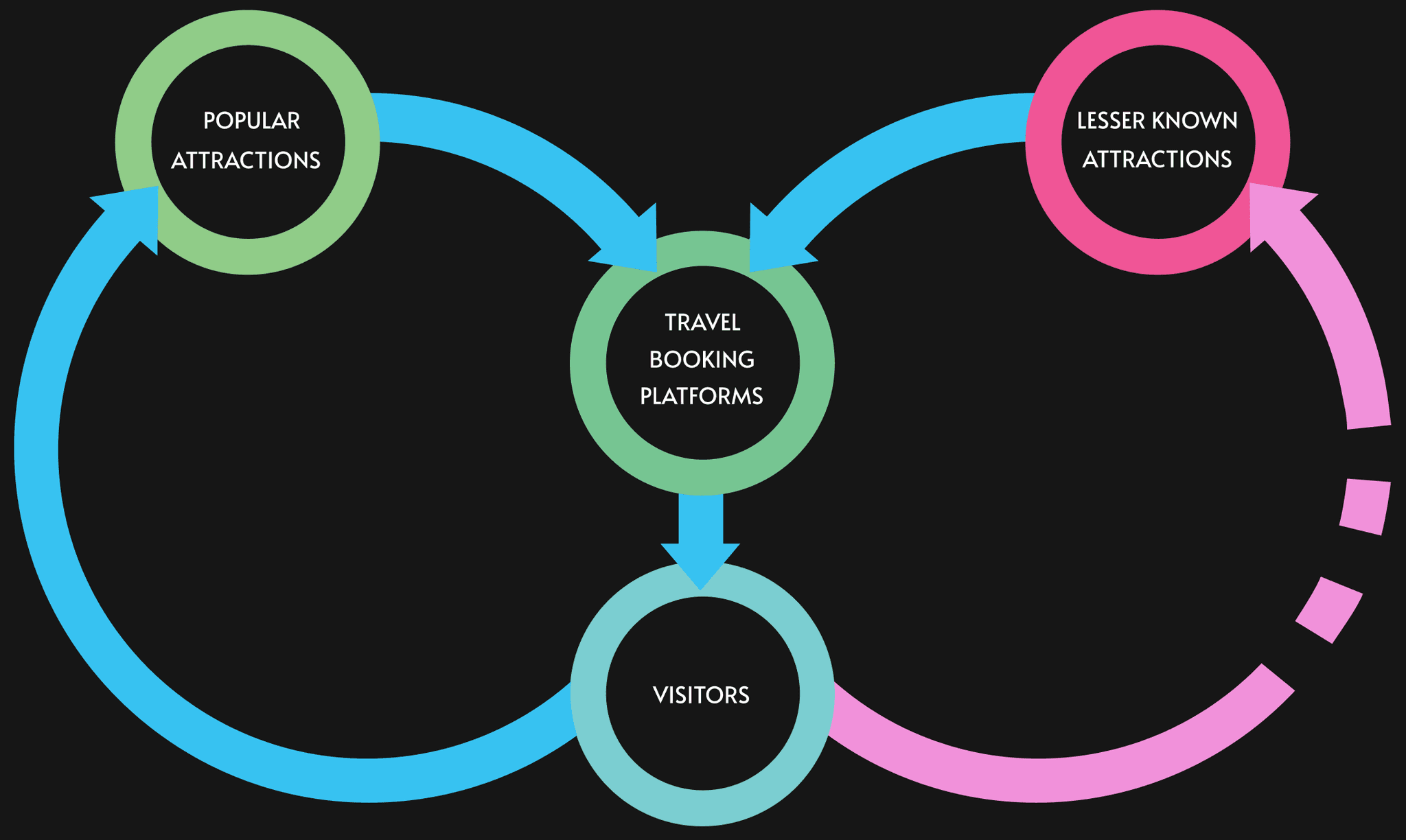
We hypothesize this is due to a lack of awareness in Singapore’s diverse offerings. With exploration largely facilitated by tourism marketing on social and travel platforms, lesser-known attractions pale in comparison to attractions more likely to engage or provide more commission.




Why do we see more potential for VisitSG?
Fast forward to 2023, STB announced plans to focus on redefining Singapore beyond popular attractions (such as Marina Bay Sands) and reconnect with visitors in their pursuit for 'Quality Tourism'. Amongst their approach is VisitSG, an App which strives to be a one stop platform to introduce visitors to Singapore.
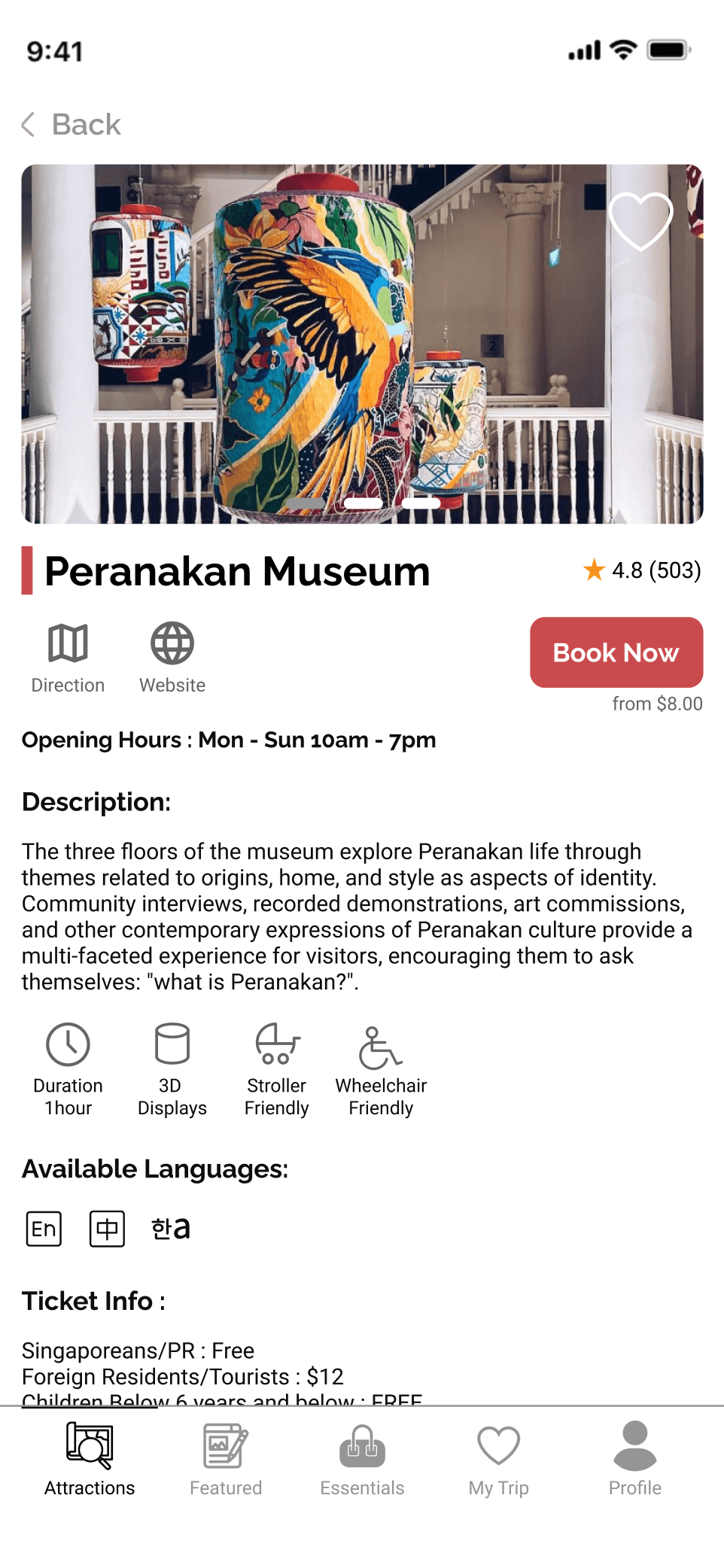
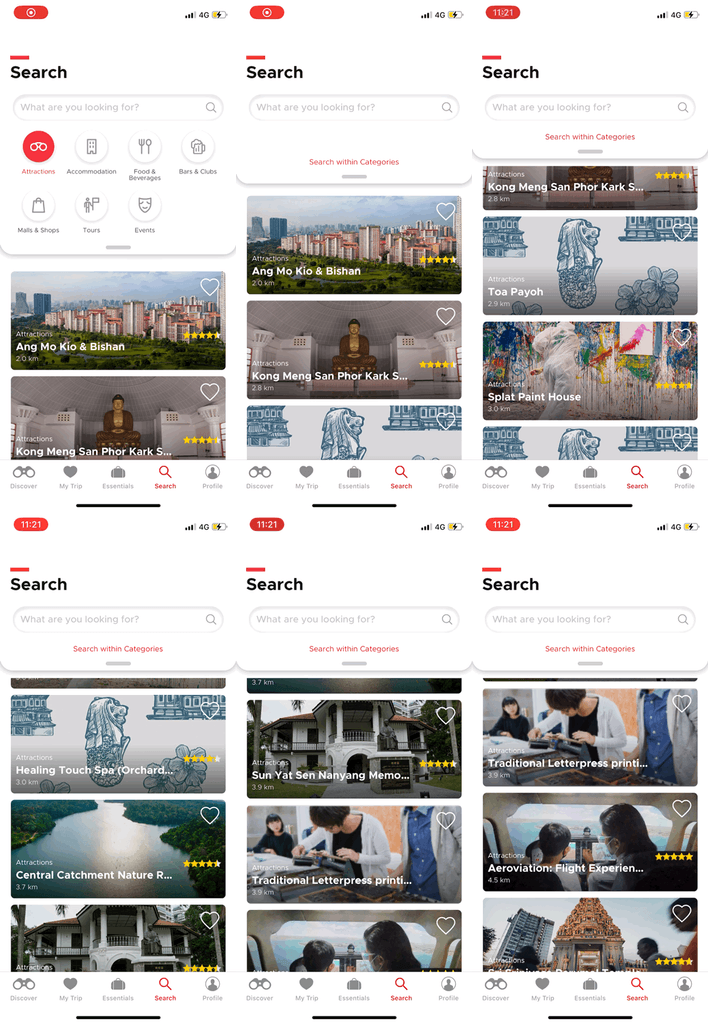
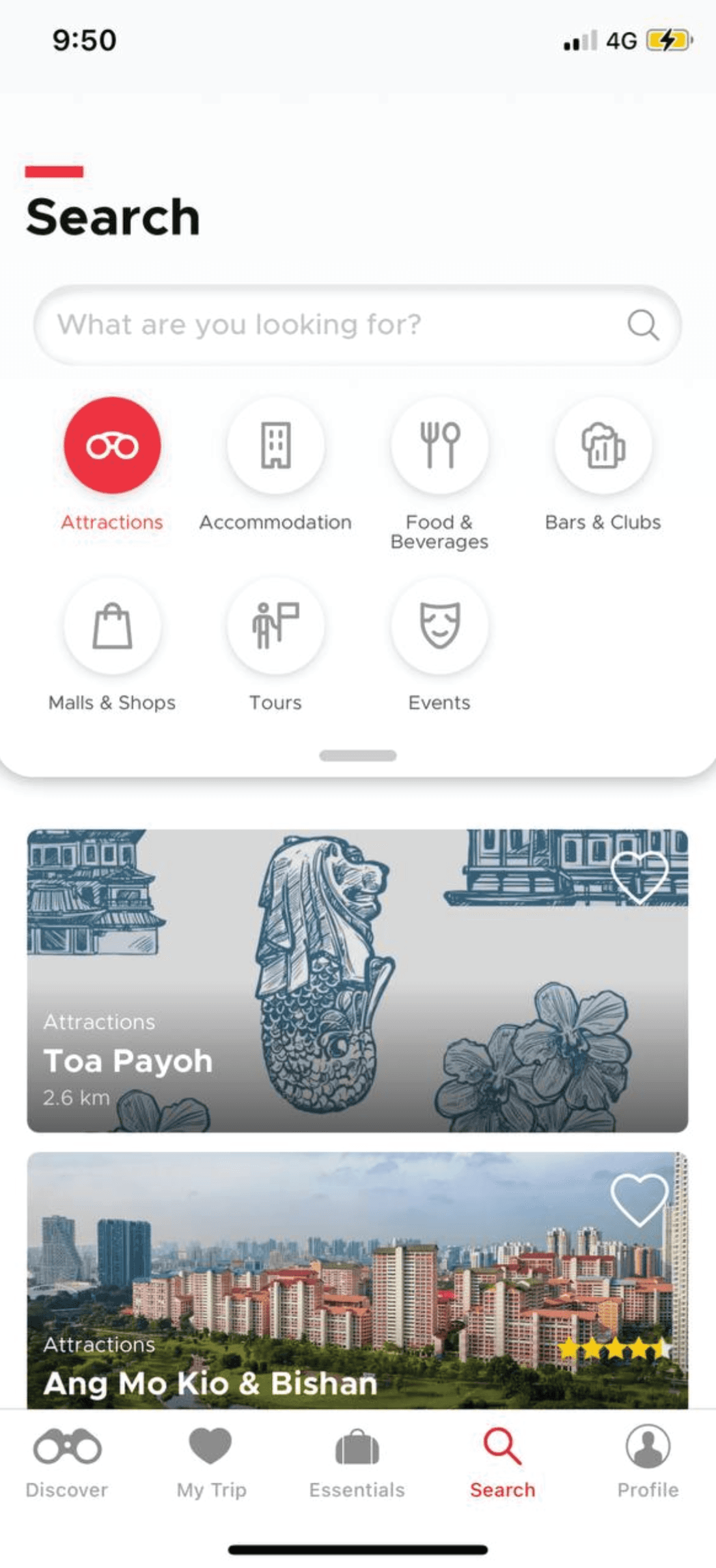
Looking into its offerings, VisitSG lists unique attractions not found on online travel agencies (OTA) platforms. However, exploration is on a proximity basis and cannot be sorted.
We see more potential for the app to effectively promote Singapore's diverse offerings and begin to look towards understanding users for a user-centric approach.
VisitSG's Functions:




Lists travel tips and document essentials
Areas for improvements:

Attraction listings are unsorted

How do users want to explore attractions?
Given a wide range of attraction types, we scoped the user research to only museums given the limited time we had for the student project. This allows a more focused understanding of users albeit not completely representative of other attraction types.
Both patrons and non-patrons were interviewed on factors leading to their preferences, where the former was conducted at museums to solicit raw recollection and responses.
6
3 & 3
25 - 40
Age of Visitors
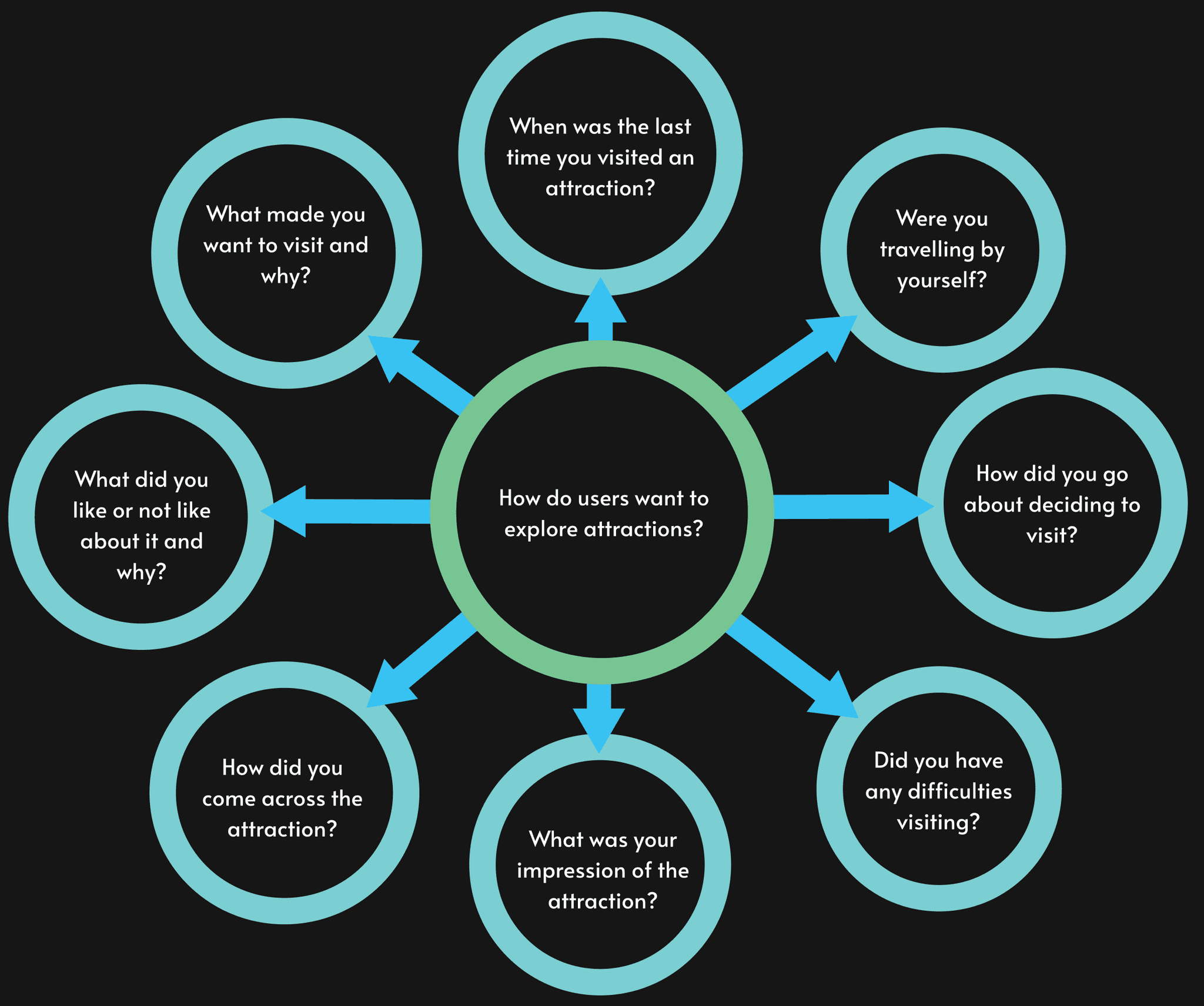
Diagram 2: User interviews questions employed with the main aim of understanding users' motivations.
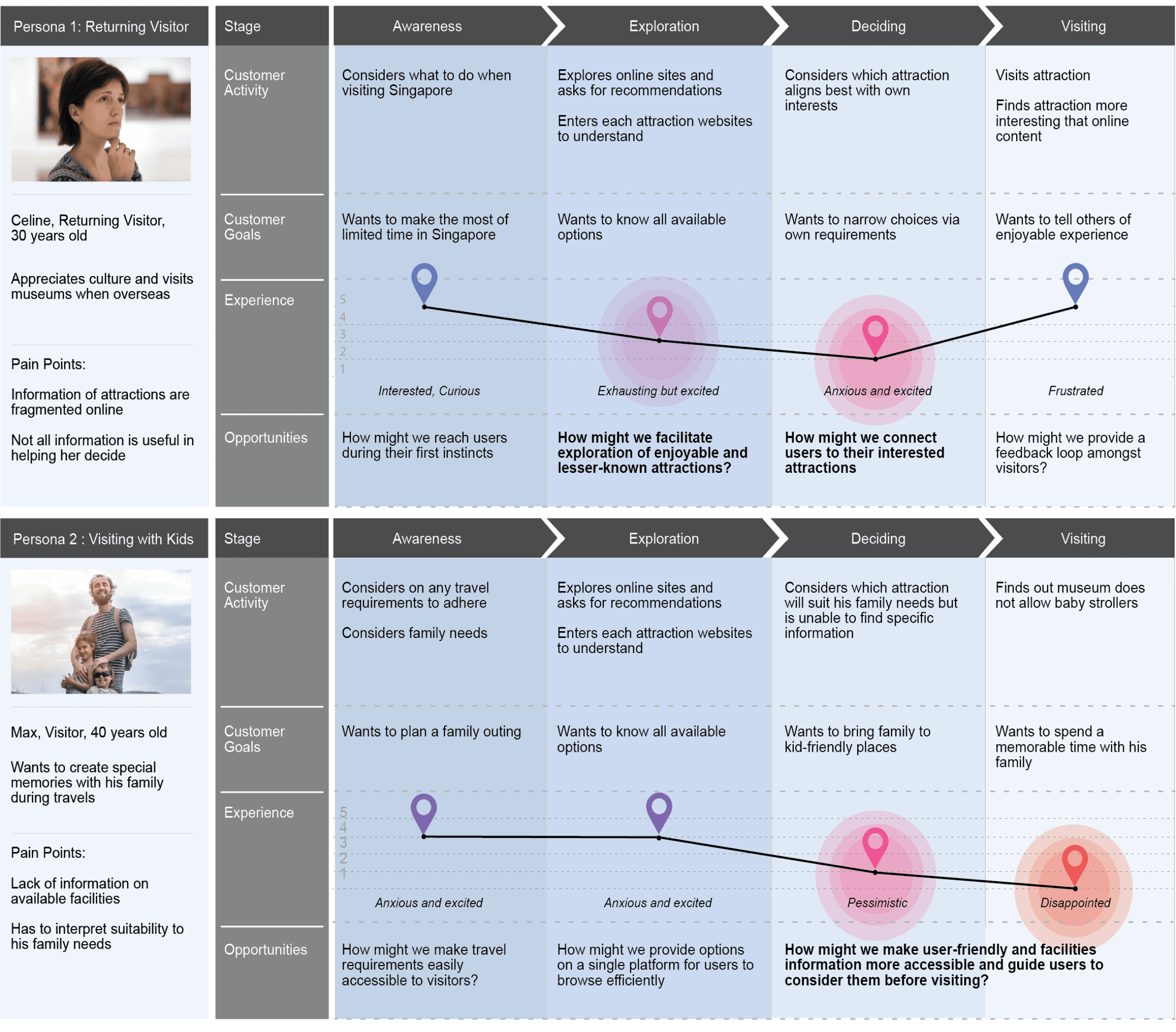
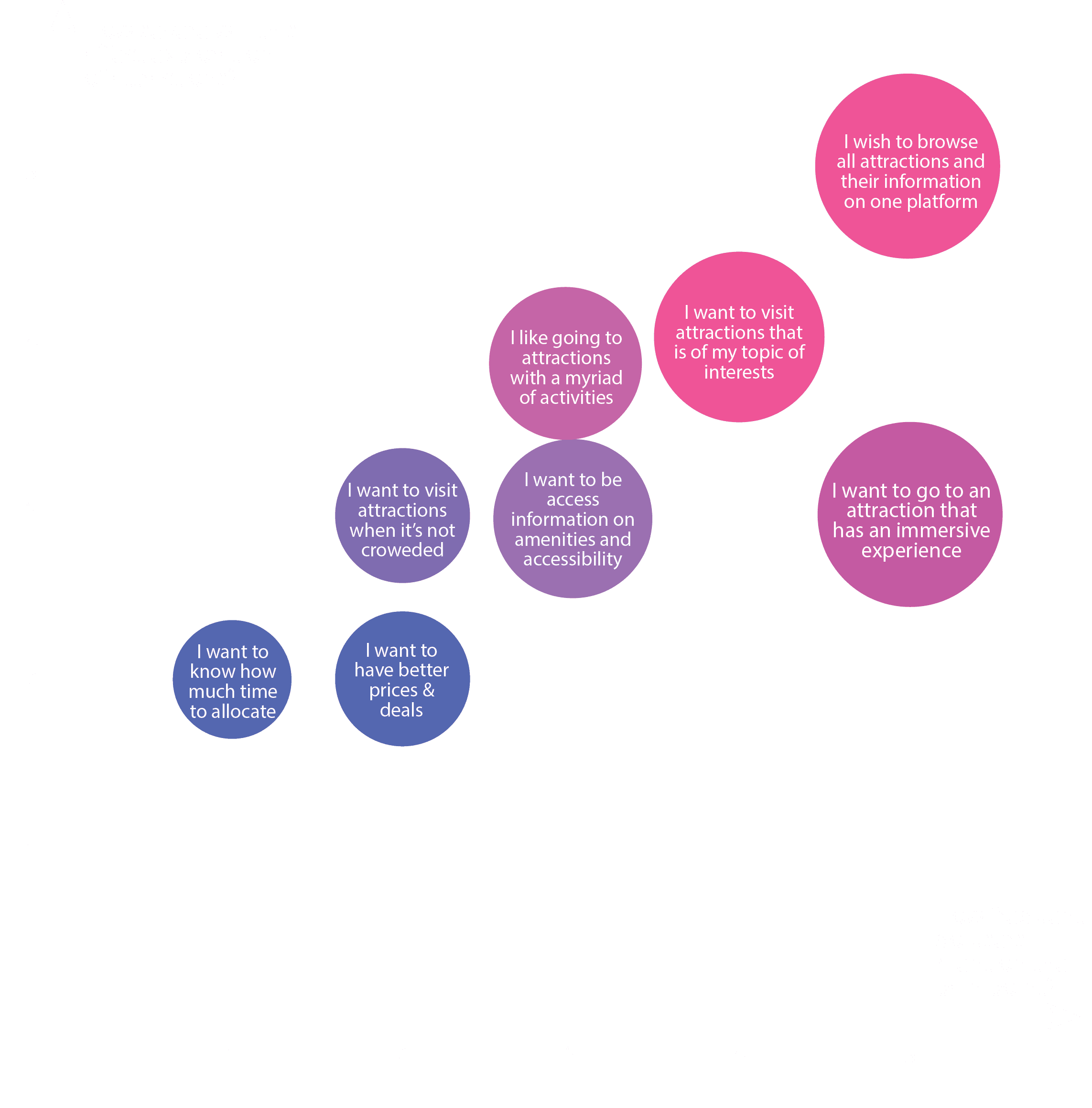
Visitors need an intuitive way to explore tourism offerings by topic of interest (e.g., culture, art), rather than activity type (e.g., tour, museum). This would allow them to discover lesser-known attractions and avoid being limited to only popular attractions or those that pay commissions to booking platforms.
VisitSG’s Goals as a unique proposition
✔
Our target users:
New and returning visitors
Locals looking for attractions to visit
✔
What VisitSG provides:
Content of all available attractions
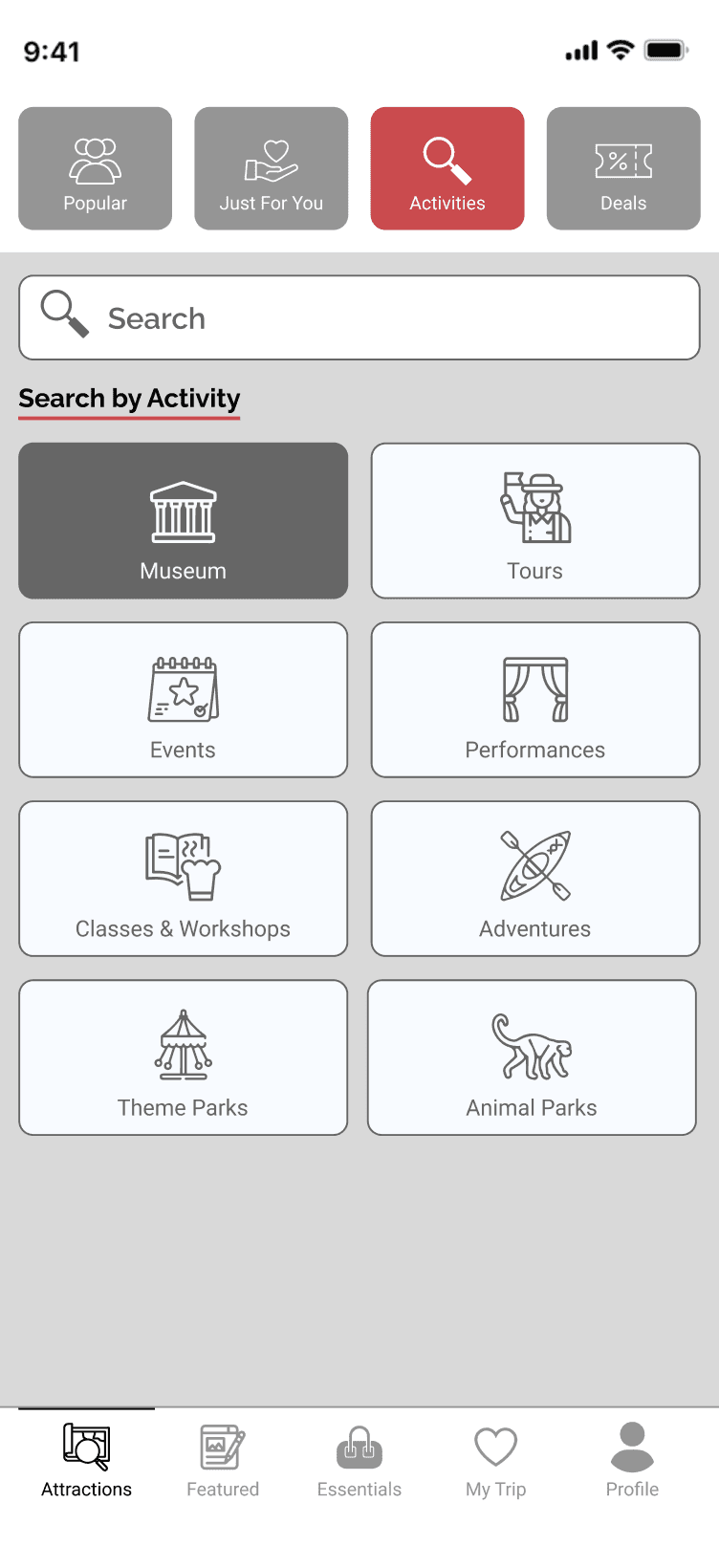
Exploration by interest & navigation by activity
Entry booking and customer reviews
✔
How this helps STB's goals:
Economic activity for all attractions
Improved branding as a destination of diverse offerings
User data on visitors’ interest for more targeted campaigns
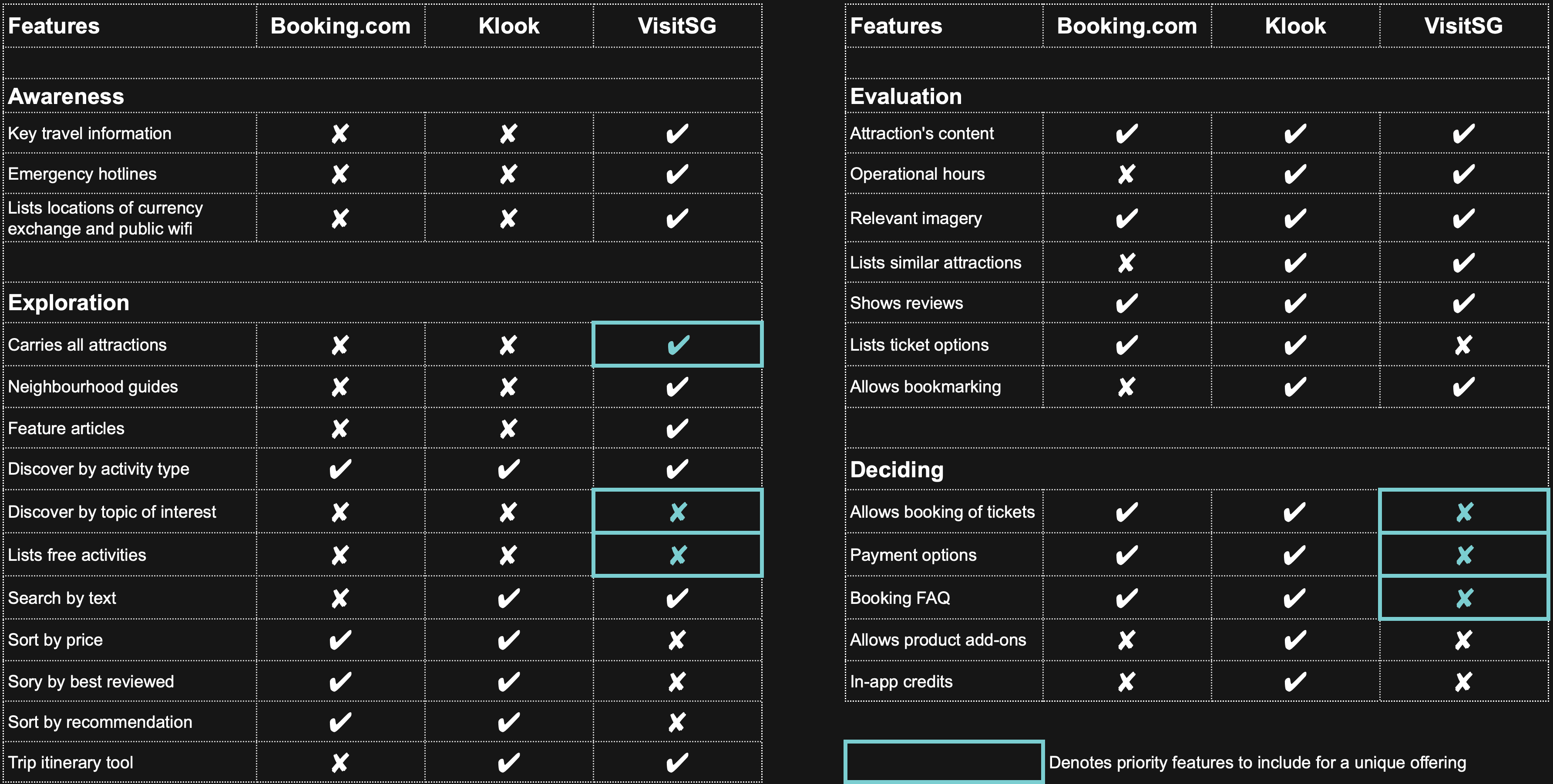
Diagram 5: Feature analysis of competing platforms
VisitSG’s re-designed prototype
1
2
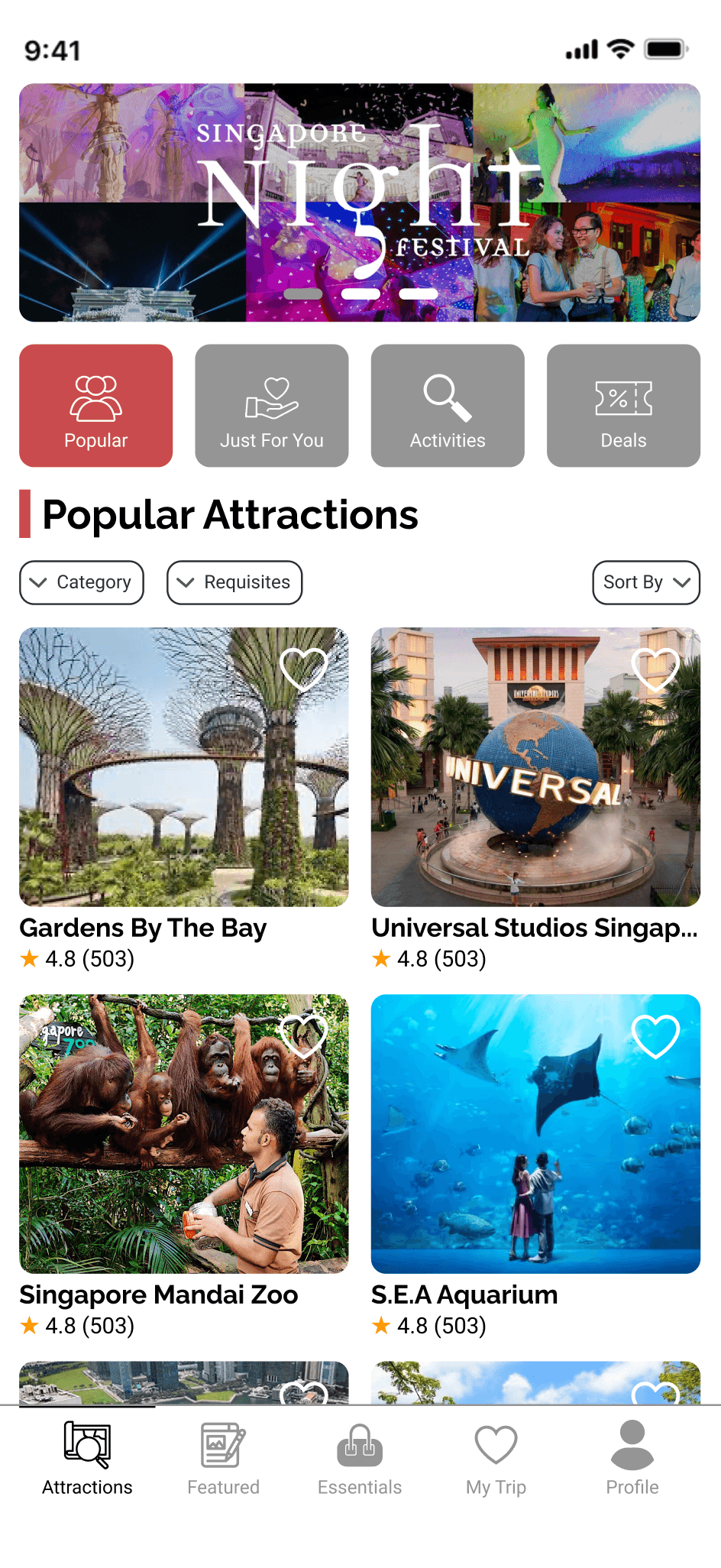
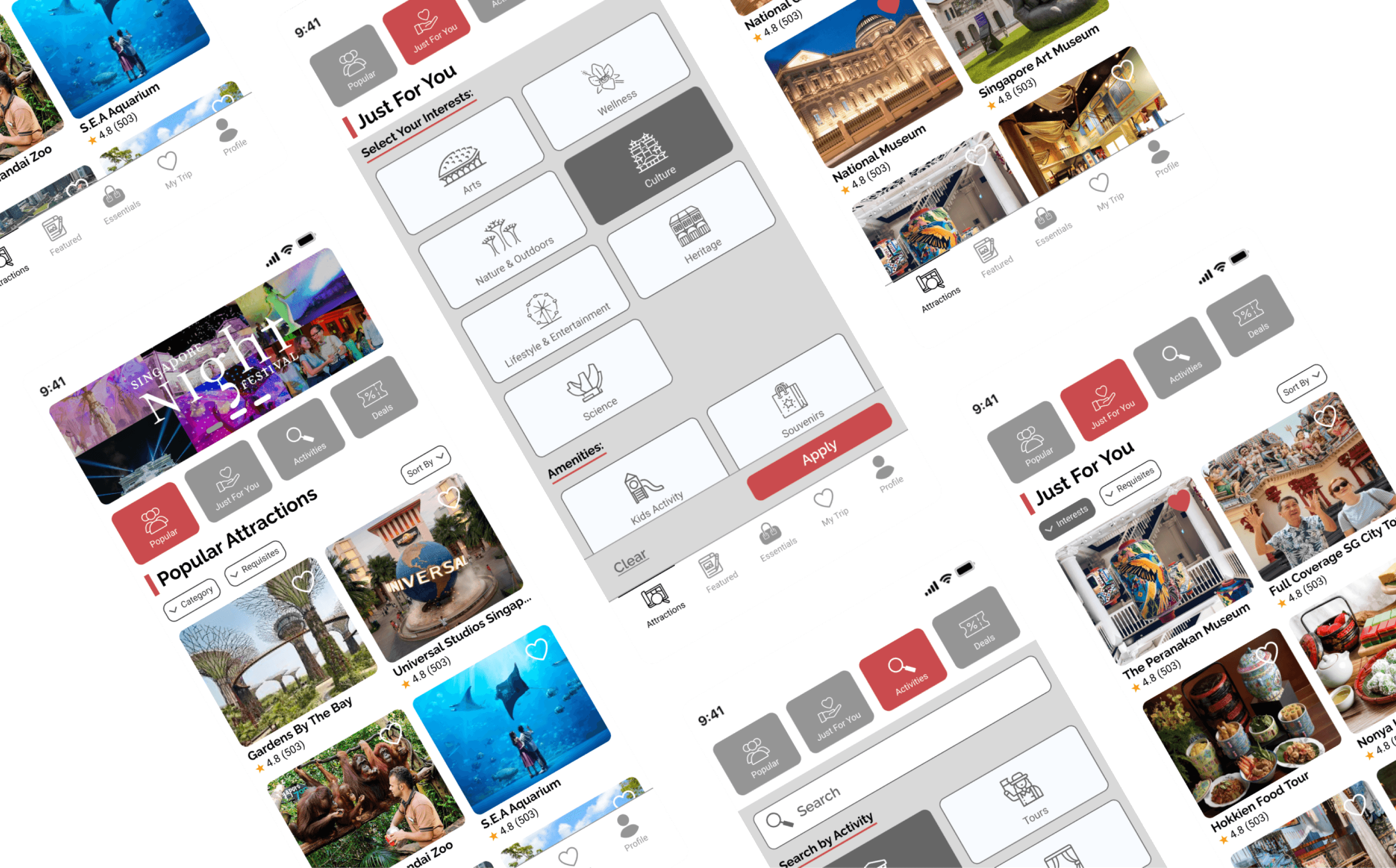
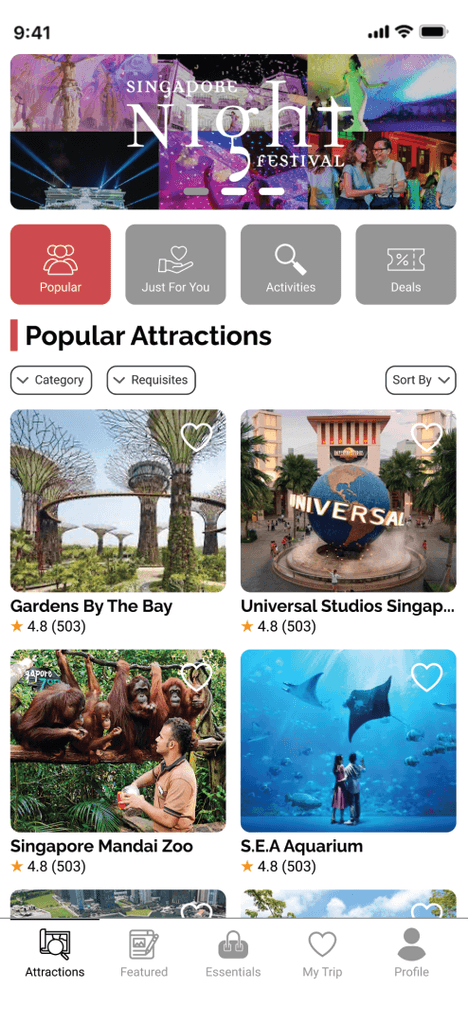
A spotlight banner and secondary navigation icons are introduced on top.
Icons are placed from left to right in decreasing priority as tourists want to prioritise popular attractions with a limited time in the country.
3
With national brand colours red and white, red was used sparingly to draw attention without adding unnecessary cognitive load to users.
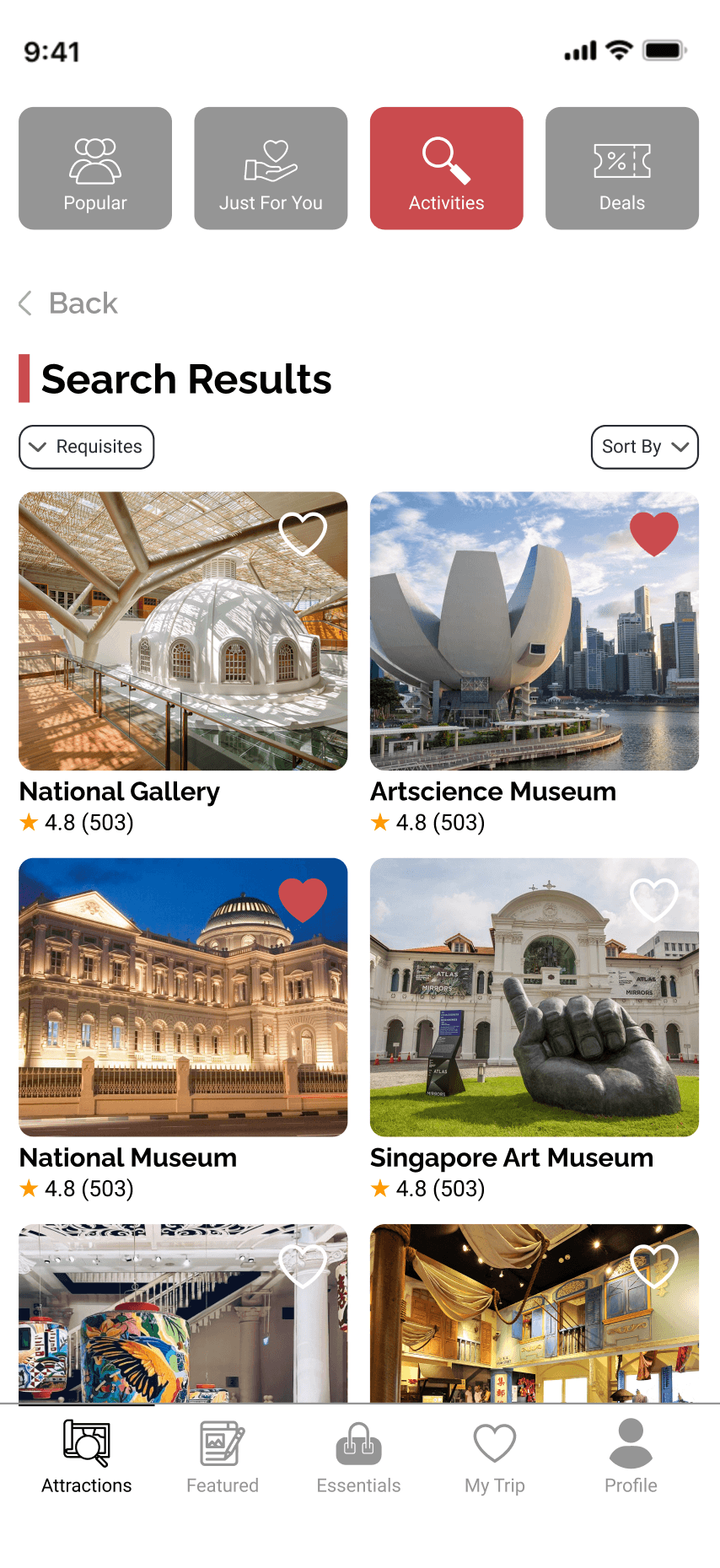
Attractions are also displayed in a 2-by-2 grid for more efficient viewing.
After
4
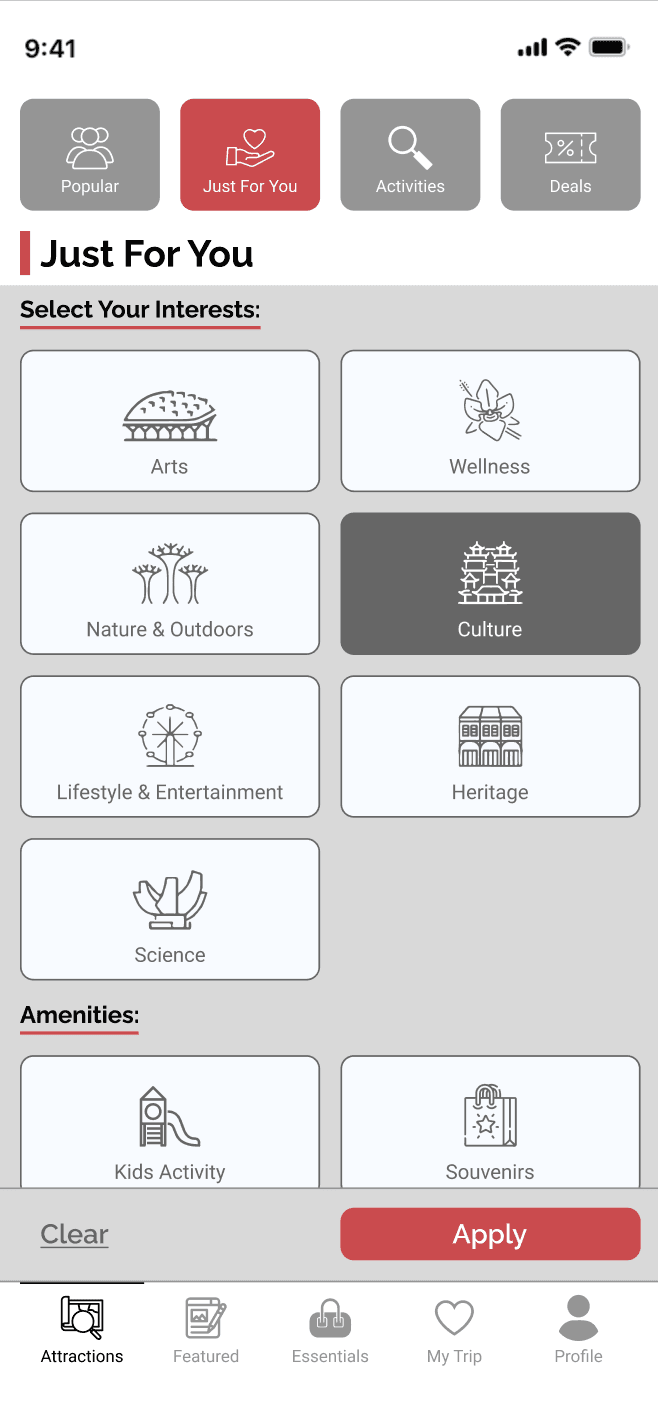
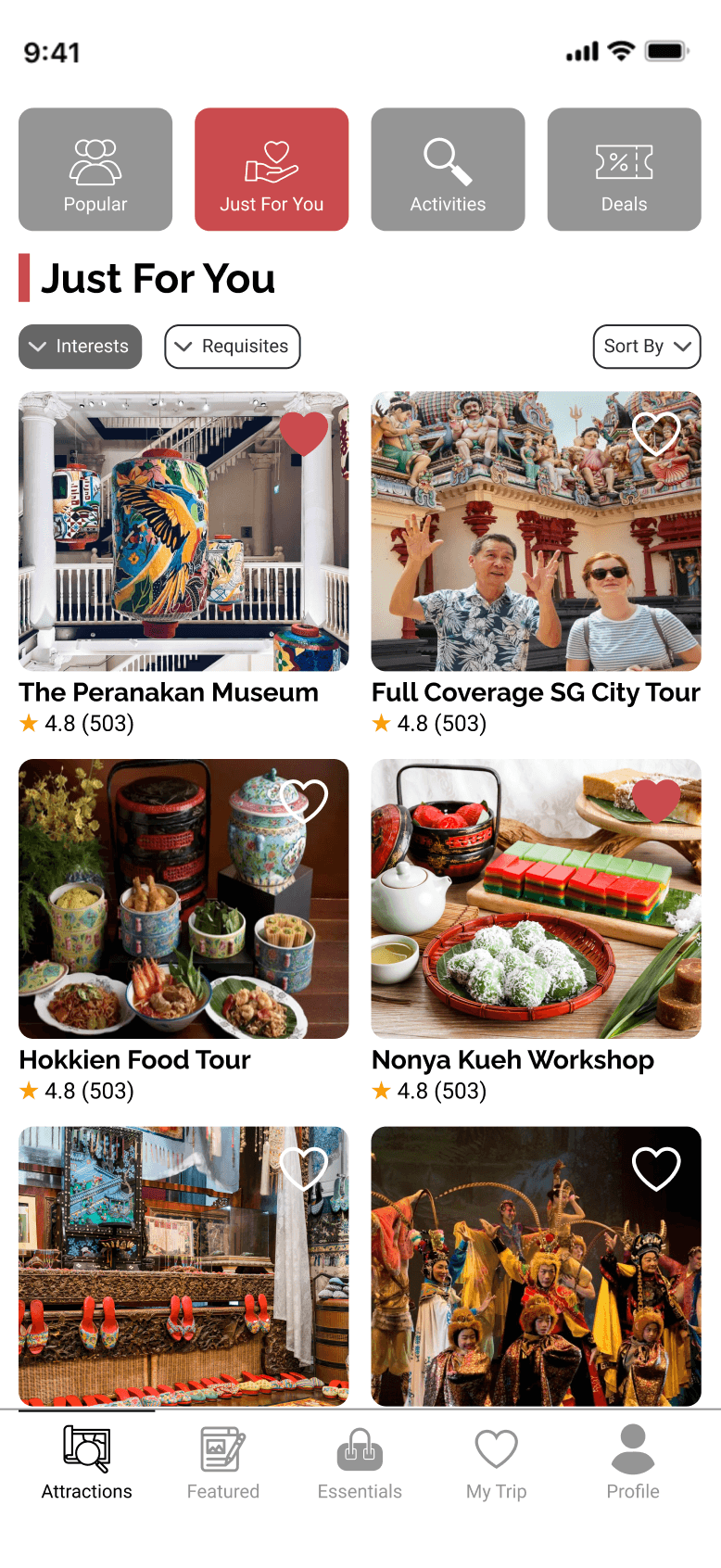
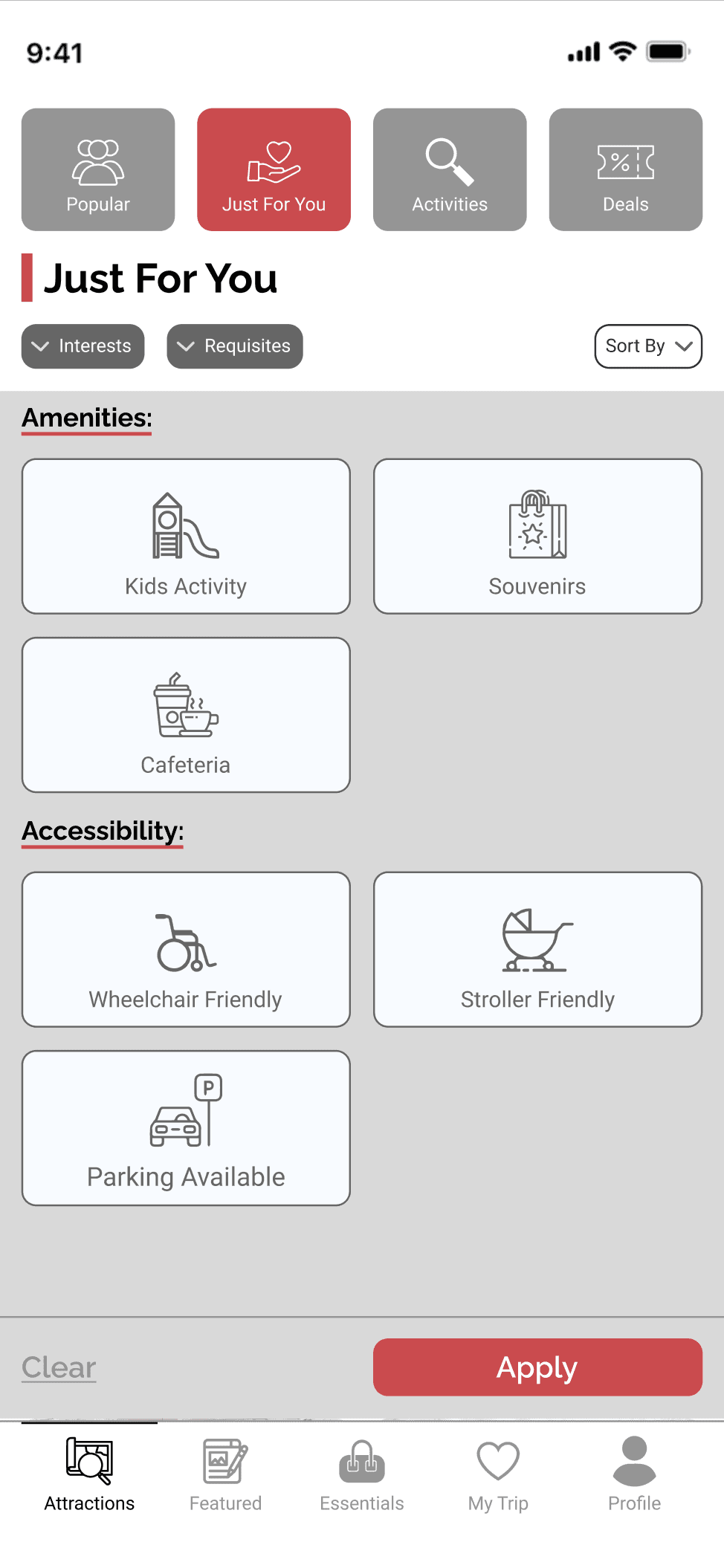
“Just For You” allow users to explore by interest. Each filter buttons changes to a darker stance upon tap, with a red “Apply” button as call-to-action.
5
6
7
Exploring by interest

Filter by travelling needs

Navigate by activity

Increase user satisfaction from exploring by interest
Majority of users found navigation by interest to be intuitive when exploring a new place. They also enjoyed the cross-activity exploration and tapped into listings which they have not been to before.
Actual economical impact to be determined
The unique proposition of this is to allow cross-activity exploration to discover attractions not found on OTAs. However, it is unclear how successful this motivates users to engage with them over returning to familiar attractions.
A need to understand users better
There are more personas to identify beyond who we interviewed. Besides solo travellers, young families and stopovers, business travellers and active retirees can have different pain points too. Ultimately, the interviewed sample should represent actual statistics.
Assumptions were made
The redesign suggests VisitSG can aid visitors in connecting with Singapore more intuitively. However this benches on assumptions, where all attractions are worthwhile to be visited and users are on a linear discovery journey.
A failed onboarding..
In my original prototype, we included an on-boarding process to get user interests and requisites. However this was proven futile during usability tests as most wanted to skip the process. If any, an onboarding will require an engaging narrative to pull users through.